
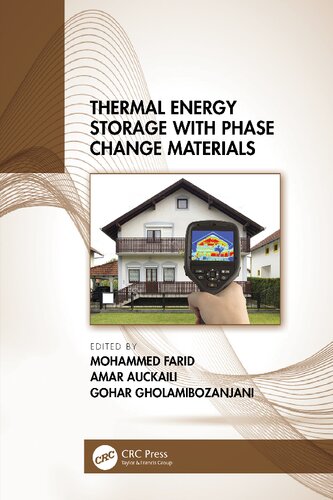
Thermal Energy Storage with Phase Change Materials Research Contributions of Professor Mohammed Mehdi Farid in Four Decades 1st Edition by Mohammed Farid, Amar Auckaili, Gohar Gholamibozanjani 0367559412 9780367559410


Original price was: $50.00.$25.00Current price is: $25.00.
Thermal Energy Storage with Phase Change Materials: Research Contributions of Professor Mohammed Mehdi Farid in Four Decades 1st Edition by Mohammed Farid, Amar Auckaili, Gohar Gholamibozanjani – Ebook PDF Instant Download/Delivery: 0367559412, 9780367559410
Full download Thermal Energy Storage with Phase Change Materials: Research Contributions of Professor Mohammed Mehdi Farid in Four Decades 1st Edition after payment
Product details:
ISBN 10: 0367559412
ISBN 13: 9780367559410
Author: Mohammed Farid, Amar Auckaili, Gohar Gholamibozanjani
This book focuses on latent heat storage, which is one of the most efficient ways of storing thermal energy. Unlike the sensible heat storage method, the latent heat storage method provides much higher storage density with a smaller difference between storing and releasing temperatures. Thermal Energy Storage with Phase Change Materials is structured into four chapters that cover many aspects of thermal energy storage and their practical applications. Chapter 1 reviews selection, performance, and applications of phase change materials. Chapter 2 investigates mathematical analyses of phase change processes. Chapters 3 and 4 present passive and active applications for energy saving, peak load shifting, and price-based control heating using phase change materials. These chapters explore the hot topic of energy saving in an overarching way, and so they are relevant to all courses. This book is an ideal research reference for students at the postgraduate level. It also serves as a useful reference for electrical, mechanical, and chemical engineers and students throughout their work. FEATURES Explains the technical principles of thermal energy storage, including materials and applications in different classifications Provides fundamental calculations of heat transfer with phase change Discusses the benefits and limitations of different types of phase change materials (PCM) in both micro- and macroencapsulations Reviews the mechanisms and applications of available thermal energy storage systems Introduces innovative solutions in hot and cold storage applications
Thermal Energy Storage with Phase Change Materials 1st Table of contents:
Chapter 1 Phase Change Material Selection and Performance
Introduction
References
Chapter 1.1 A Review on Phase Change Energy Storage: Materials and Applications
1.1.1 Introduction
1.1.2 Phase Change Materials
1.1.2.1 Classification and Properties of PCMs
1.1.2.2 Phase Segregation and Subcooling Problems
1.1.2.3 Stability of Thermal Properties under Extended Cycling
1.1.2.4 Heat Transfer Enhancement Methods
1.1.3 Encapsulation of PCMs
1.1.4 Major Applications of PCMs
1.1.4.1 Indirect Contact Latent Heat Storage of Solar Energy
1.1.4.2 Thermal Storage with Direct Contact Heat Exchangers
1.1.4.2.1 Solid–Solid Transition with Direct Contact Heat Transfer
1.1.4.2.2 Direct Contact Heat Transfer between Hydrated Salts and an Immiscible Fluid
1.1.4.3 Phase Change Thermal Storage for Shifting the Peak Heating Load
1.1.4.4 Building Applications
1.1.5 New PCM Technological Innovations
1.1.6 Conclusions
References
Chapter 1.2 Fire Retardants for Phase Change Materials
1.2.1 Introduction
1.2.2 Experiments
1.2.2.1 Materials
1.2.2.2 Preparation of Fire-Retarded Form-Stable PCM
1.2.2.3 Test for Fire Retardancy
1.2.2.3.1 Vertical Burning Test
1.2.2.3.2 Thermal Stability Test
1.2.2.3.3 Cone Calorimeter Test
1.2.2.3.4 DSC Test
1.2.3 Results and Discussion
1.2.3.1 Fire Retardancy and Fire Spread Using Vertical Burning Test
1.2.3.2 Thermal Stability of Fire-Retarded Form-Stable PCM
1.2.3.3 Flammability of Form-Stable PCM
1.2.3.4 Latent Heat of Fire-Retarded Form-Stable PCM
1.2.4 Conclusions
Acknowledgement
Glossary
References
Chapter 1.3 Long-Term Thermal Stability of Organic PCMs
1.3.1 Introduction
1.3.2 Materials and Method
1.3.2.1 Experimental Procedure
1.3.2.1.1 Oven Trials
1.3.2.1.2 Naturally Exposed
1.3.2.1.3 Cyclic Trials
1.3.2.2 Analytical Method
1.3.2.3 Materials
1.3.3 Results and Discussion
1.3.4 Conclusions
Acknowledgements
References
Chapter 1.4 A Novel Calcium Chloride Hexahydrate-Based Deep Eutectic Solvent as a Phase Change Material
1.4.1 Introduction
1.4.2 Experimental Details
1.4.2.1 Chemicals
1.4.2.2 Preparation of DESs
1.4.2.3 Characterization of DESs
1.4.3 Results and Discussion
1.4.4 Conclusion
Acknowledgments
Appendix A. Supplementary Material
References
Chapter 2 Mathematical Analysis of Phase Change Processes
Introduction
References
Chapter 2.1 A New Approach in the Calculation of Heat Transfer with Phase Change
2.1.1 Introduction
2.1.2 Analysis
2.1.3 Results
2.1.4 Conclusion
Nomenclature
Subscript
References
Chapter 2.2 Effect of Natural Convection on the Process of Melting and Solidification of Paraffin Wax
2.2.1 Introduction
2.2.2 Apparatus and Procedure
2.2.3 Theory and Methods of Computation
2.2.3.1 Neumann Analysis
2.2.3.2 Melting from below with Natural Convection
2.2.4 Results and Discussion
2.2.4.1 Solidification from Below
2.2.4.2 Melting with Convection
2.2.5 Conclusion
Acknowledgements
Nomenclature
Subscripts
References
Chapter 2.3 The Role of Natural Convection during Melting and Solidification of PCM in a Vertical Cylinder
2.3.1 Introduction
2.3.2 Experimental
2.3.3 General Pattern of Melting and Solidification
2.3.3.1 Melting
2.3.3.2 Solidification
2.3.4 The Analysis
2.3.4.1 Evaluation of Natural Convection in the Melt
2.3.5 Results and Discussion
2.3.5.1 Evaluation of the Effective Thermal Conductivity
2.3.5.2 Experimental Measurements and Model Predictions
2.3.6 Conclusion
Acknowledgements
Nomenclature
Subscript
References
Chapter 2.4 Thermal Performance of a Heat Storage Module Using PCMs with Different Melting Temperatures: Mathematical Modeling
2.4.1 Introduction
2.4.2 Analysis
2.4.3 Results of Simulation
2.4.4 Conclusion
Acknowledgement
Nomenclature
Greek Letters
Subscript
References
Chapter 2.5 Performance of Direct Contact Latent Heat Storage Units with Two Hydrated Salts
2.5.1 Introduction
2.5.2 Measurements
2.5.2.1 Measurements of Heat Losses and Bubble Size
2.5.3 Theoretical Analysis
2.5.4 Results
2.5.4.1 Water System
2.5.4.2 Prediction of the Performance of the Storage Unit Employing Hydrated Salts
2.5.4.3 Volumetric Heat Transfer Coefficient
2.5.4.4 Thermal Efficiency
2.5.4.5 Power Input and Output from the System
2.5.5 Conclusions
Acknowledgements
Nomenclature
Greek
Appendix 1: Physical Properties
References
Chapter 3 Energy Saving, Peak Load Shifting and Price-Based Control Heating: Passive Applications
Introduction
References
Chapter 3.1 A Review on Energy Conservation in Building Applications with Thermal Storage by Latent Heat Using Phase Change Materials
3.1.1 Introduction
3.1.2 PCM Developments
3.1.3 Phase-Change Thermal Storage for Peak Load Shifting
3.1.4 Phase Change Material Encapsulation in Structures
3.1.4.1 Wallboards Impregnated with PCMs
3.1.4.2 Concrete Blocks Impregnating with PCMs
3.1.4.3 Underfloor Heating with Latent Heat Storage
3.1.5 Micro- and Macroencapsulation Methods
3.1.6 Fire Retardation of PCM-Treated Construction Materials
3.1.7 Conclusions
References
Chapter 3.2 Impact of Energy Storage in Buildings on Electricity Demand Side Management
3.2.1 Introduction
3.2.2 Electrical DSM and New Zealand Context
3.2.3 Research Setup
3.2.4 Results and Analysis
3.2.4.1 DSM Opportunity through PCM for NZEM
3.2.4.1.1 Load Shifting and Price Efficiency
3.2.4.1.2 Energy Conservation
3.2.4.2 Energy Conservation Analysis for Multiple Days
3.2.5 Conclusions
Acknowledgements
References
Chapter 3.3 Experimental Validation of a Methodology to Assess PCM Effectiveness in Cooling Building Envelopes Passively
3.3.1 Introduction
3.3.2 Indicators for the PCM Evaluation
3.3.2.1 Intensity of Thermal Discomfort for Overheating (ITDover)
3.3.2.2 Frequency of Thermal Comfort (FTCover)
3.3.2.3 Frequency of Activation FA
3.3.2.4 PCM Storage Efficiency
3.3.3 Proposed Modifications to the Indicators
3.3.3.1 Full-Period ITD
3.3.3.2 Full-Period Frequency of Thermal Comfort
3.3.4 Experimental Setup
3.3.4.1 Lightweight Constructions
3.3.4.2 Massive Buildings—Concrete
3.3.4.3 Massive Buildings—Brick
3.3.5 Results and Discussion
3.3.6 Conclusions
Acknowledgments
Nomenclature
Subindex
References
Chapter 3.4 Peak Load Shifting with Energy Storage and Price-Based Control System
3.4.1 Introduction
3.4.2 Methodology
3.4.2.1 Price-Based Method
3.4.2.2 The Experimental Setup
3.4.2.2.1 Domestic Freezer
3.4.2.2.2 Data Acquisition and Control in the Freezer
3.4.2.2.3 Experimental Hut
3.4.2.2.4 Data Acquisition and Control in the Hut Experiment
3.4.3 Results and Discussion
3.4.3.1 Freezer Experiment
3.4.3.2 Hut Experiment
3.4.3.2.1 Space Heating Using Price-Based Control Method
3.4.3.2.2 Power Consumption
3.4.4 Conclusions
Acknowledgements
Abbreviations
References
Chapter 3.5 Application of Weather Forecast in Conjunction with Price-Based Method for PCM Solar Passive Buildings – An Experimental Study
3.5.1 Introduction
3.5.1.1 Application of PCM in Solar Passive Buildings
3.5.1.2 Application of Weather Forecasts in Energy Management in Buildings with PCM
3.5.2 Methodology
3.5.2.1 Experimental Setup
3.5.2.2 Thermal Energy Storage
3.5.2.3 Data Acquisition
3.5.2.4 Control System
3.5.3 Results and Discussion
3.5.4 Conclusion
Acknowledgements
Abbreviations
References
Chapter 3.6 Application of PCM Energy Storage in Combination with Night Ventilation for Space Cooling
3.6.1 Introduction
3.6.2 Methodology
3.6.2.1 Experimental Setup
3.6.2.2 PCM Selection and Impregnation
3.6.2.3 Control System
3.6.2.4 Night Ventilation
3.6.3 Results
3.6.3.1 Application of AC Unit
3.6.3.2 Application of Night Ventilation in Combination with AC in Hut 2
3.6.4 Conclusion
Acknowledgements
References
Chapter 3.7 Application of PCM Underfloor Heating in Combination with PCM Wallboards for Space Heating Using Price-Based Control System
3.7.1 Introduction
3.7.2 Methodology
3.7.2.1 Price-Based Control
3.7.2.2 Experimental Setup
3.7.2.2.1 Underfloor Heating System
3.7.2.2.2 PCM Underfloor Heating System in Combination with PCM Wallboard
3.7.2.3 Data Acquisition and Control
3.7.3 Results and Discussion
3.7.3.1 Underfloor Heating System
3.7.3.2 Underfloor Heating in Combination with PCM Wallboards
3.7.3.3 Further Comments and Discussions
3.7.4 Conclusions
Acknowledgement
Abbreviations
References
Chapter 3.8 Analysis of Energy Requirements versus Comfort Levels for the Integration of Phase Change Materials in Buildings
3.8.1 Introduction
3.8.2 Methodology of the Investigation for a Typical House Using Computer Simulation
3.8.2.1 Development of a Building Simulation Model
3.8.2.2 Modelling of a Typical House
3.8.2.2.1 Geometry and Materials
3.8.2.2.2 HVAC
3.8.2.2.3 Occupancy
3.8.2.3 Inputs in the Model
3.8.2.3.1 Heating Set Point
3.8.2.3.2 Types of Gypsum Boards
3.8.2.4 Outputs of the Model
3.8.2.4.1 Comfort Level
3.8.2.4.2 Energy Requirements
3.8.3 Results and Discussion
3.8.4 Conclusion
Acknowledgments
References
Chapter 3.9 Benefits of PCM Underfloor Heating with PCM Wallboards for Space Heating in Winter
3.9.1 Introduction
3.9.2 Methodology
3.9.2.1 The Inputs to the Model
3.9.2.1.1 The Hut Construction
3.9.2.1.2 Run Period and Weather Data
3.9.2.1.3 The Underfloor Heating System & Schedule
3.9.2.2 The Outputs of the Model
3.9.3 Computer Validation
3.9.3.1 The Run Period
3.9.3.2 Comparison of the Results
3.9.4 Results and Discussion
3.9.4.1 Peak Period Position Analysis
3.9.4.1.1 The Morning Peak Period
3.9.4.1.2 The Evening Peak Period
3.9.4.2 Detailed Results – Graphs
3.9.4.3 Detailed Results – Table
3.9.5 Conclusions
Acknowledgments
References
Chapter 4 Energy-Saving, Peak Load Shifting and Price-Based Control Heating and Cooling: Active Applications
References
Chapter 4.1 Application of an Active PCM Storage System into a Building for Heating/Cooling Load Reduction
4.1.1 Introduction
4.1.2 Methodology
4.1.2.1 Experimental Setup
4.1.2.1.1 Air-PCM Heat Storage Units
4.1.2.1.2 Solar Air Heater
4.1.2.1.3 Experimental Huts
4.1.2.2 Measurement Instrumentation
4.1.2.3 Data Acquisition
4.1.2.4 Control System
4.1.2.4.1 Space Heating
4.1.2.4.2 Space Cooling
4.1.3 Results and Discussion
4.1.3.1 Space Heating
4.1.3.1.1 Application of Air-Based PCM System for Heating in Combination with Solar Heater
4.1.3.1.2 Application of Air-Based PCM in Combination with Solar and Electric Heaters
4.1.3.2 Space Cooling
4.1.3.3 Further Comments and Discussion
4.1.4 Conclusions
Author Statement
Declaration of Competing Interest
Acknowledgment
Nomenclature
References
Chapter 4.2 Peak Load Shifting Using a Price-Based Control in PCM-Enhanced Buildings
4.2.1 Introduction
4.2.2 Methodology
4.2.2.1 Experimental Setup
4.2.2.1.1 PCM Storage Unit
4.2.2.1.2 Experimental Huts
4.2.2.2 Measurement Instrumentation
4.2.2.3 Data Acquisition
4.2.2.4 Control System
4.2.3 Results and Discussion
4.2.3.1 Heating Peak Load Shifting
4.2.3.1.1 Energy-Savings
4.2.3.1.2 Cost Savings
4.2.3.2 Cooling Peak Load Shifting
4.2.3.3 Further Comments and Discussion
4.2.4 Conclusion and Future Studies
Declaration of Competing Interest
Acknowledgment
Nomenclature
References
Chapter 4.3 Model Predictive Control Strategy Applied to Different Types of Building for Space Heating
4.3.1 Introduction
4.3.2 Methodology
4.3.2.1 Description of the System
4.3.2.1.1 General Overview
4.3.2.1.2 Solar Air Collector
4.3.2.1.3 Heat Exchanger
4.3.2.1.4 Backup Heater
4.3.2.2 Heating Demand Simulation
4.3.2.3 Numerical Optimization
4.3.2.4 MPC Strategy
4.3.3 Results and Discussion
4.3.3.1 Effect of Receding Horizon
4.3.3.2 Effect of Decision Time Step
4.3.3.3 Effect of Mass Capacity of PCM
4.3.3.4 MPC Performance in Different Buildings
4.3.4 Conclusions
Acknowledgements
Nomenclature
Greek symbols
Subscripts
References
Chapter 4.4 A Comparison between Passive and Active PCM Systems Applied to Buildings
4.4.1 Introduction
4.4.2 Methodology
4.4.2.1 Experimental Setup
4.4.2.2 Data Acquisition
4.4.2.3 Control System
4.4.3 Results and Discussion
4.4.3.1 Comparison of PTSS and ATSS
4.4.3.1.1 Space Cooling
4.4.3.1.2 Space Heating
4.4.3.1.3 Peak Load Shifting Using PTSS and ATSS
4.4.3.2 Further Comparison of PTSS and ATSS
4.4.4 Conclusion
People also search for Thermal Energy Storage with Phase Change Materials 1st:
thermal energy storage pcm
phase change materials energy storage
pcm heat storage book
thermal energy storage engineering
phase change materials research
Tags: Thermal Energy, Change Materials, Contributions, Mohammed Mehdi, Mohammed Farid, Amar Auckaili, Gohar Gholamibozanjani
You may also like…

Society Politics Philosophy Sociology
Uncategorized
Recent Advancements in Polymeric Materials for Electrochemical Energy Storage Ram K Gupta Editor

Uncategorized
Azerbaijan s Geopolitical Landscape Contemporary Issues 1991 2018 1st Edition Farid Shafiyev

Engineering - Electrical & Electronic Engineering
Voltage Stability in Electrical Power Systems 1st Edition Farid Karbalaei
Engineering - Electrical & Electronic Engineering
Automatic Control Systems Tenth Edition by Farid Golnaraghi, Benjamin C Kuo 9781259643842 1259643840

Engineering - Energy & Power Resources
Electrode Materials for Energy Storage and Conversion 1st Edition Mesfin A. Kebede
Technique - Electronics
Fundamentals of Electronic Amplifiers Analysis and Design 1st Edition Farid Tranjan

History - African History
Islamist Foreign Policy in Sudan 1st Edition Mohammed H Sharfi
Uncategorized