
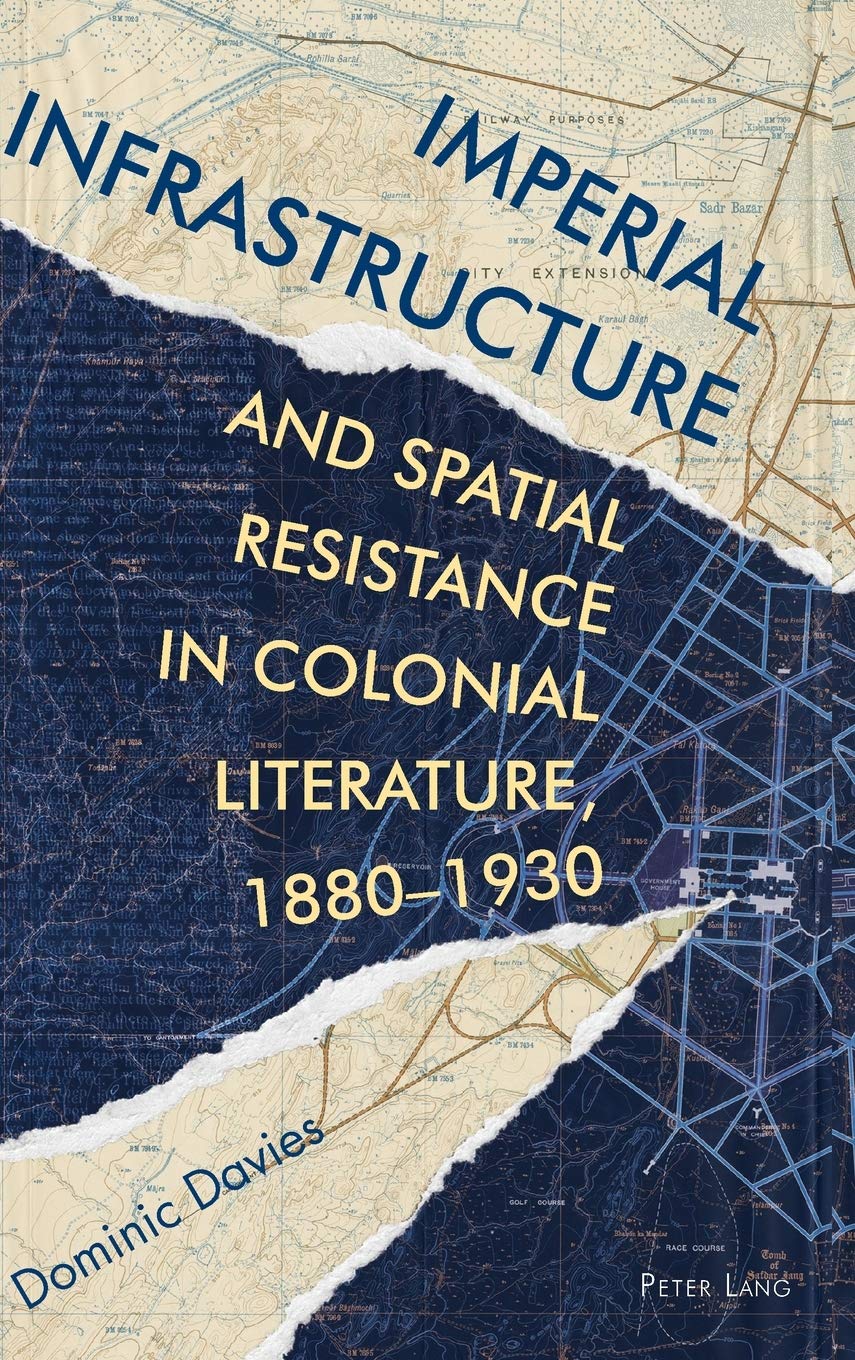
Imperial Infrastructure and Spatial Resistance in Colonial Literature 1880 1930 1st edition by Dominic Davies 1906165882 9781906165888


Original price was: $50.00.$25.00Current price is: $25.00.
Imperial Infrastructure and Spatial Resistance in Colonial Literature, 1880–1930 1st Edition by Dominic Davies – Ebook PDF Instant Download/Delivery: 1906165882, 9781906165888
Full download Imperial Infrastructure and Spatial Resistance in Colonial Literature, 1880–1930 1st Edition after payment
Product details
ISBN 10: 1906165882
ISBN 13: 9781906165888
Author: Dominic Davies
Between 1880 and 1930, the British Empire’s vast infrastructural developments facilitated the incorporation of large parts of the globe into not only its imperial rule, but also the capitalist world-system. Throughout this period, colonial literary fiction, in recording this vast expansion, repeatedly cited these imperial infrastructures to make sense of the various colonial landscapes in which they were set. Physical embodiments of empire proliferate in this writing. Railways and trains, telegraph wires and telegrams, roads and bridges, steamships and shipping lines, canals and other forms of irrigation, cantonments, the colonial bungalow, and other kinds of colonial urban infrastructure – all of these infrastructural lines broke up the landscape and gave shape to the literary depiction and production of colonial space. By developing a methodology called «infrastructural reading», the author shows how a focus on the infrastructural networks that circulate through colonial fiction are almost always related to some form of anti-imperial resistance that manifests spatially within their literary, narrative and formal elements. This subversive reading strategy – which is applied in turn to writers as varied as H. Rider Haggard, Olive Schreiner and John Buchan in South Africa, and Flora Annie Steel, E.M. Forster and Edward Thompson in India – demonstrates that these mostly pro-imperial writings can reveal an array of ideological anxieties, limitations and silences as well as more direct objections to and acts of violent defiance against imperial control and capitalist accumulation.
Imperial Infrastructure and Spatial Resistance in Colonial Literature, 1880–1930 1st Table of contents
Chapter 1: Mapping Humanitarianism: Flora Annie Steel and the Contradictions of Colonial Capitalism
Introduction: From Contradiction to Resistance
The ‘Gaps’ of Colonial Capitalism in On the Face of the Waters (1896)
Consolidating Ideology: Flags, Telegraphs and Governmental Reports
The Silences of Steel’s Short Fiction
Perspectival Shifts: Resisting Infra-Structural Violence
Chapter 2: Mapping Segregation: Literary Geographies of South Africa
Introduction: Industrialisation, Urbanisation, Segregation
The Infrastructure of the Imperial Romance: King Solomon’s Mines
Racial Segregation and the Cape to Cairo Railway
Grounding Meta-Narrative: Olive Schreiner’s Geographies of Resistance
Rewriting the Imperial Romance: The Revolutionary Trajectories of ‘Ula Masondo’ (1927)
Chapter 3: Mapping Frontiers: John Buchan and the Topographies of Imperial Ideology
Introduction: Frontiers and Borderlands
The Infrastructure of the Frontier
The Symbolic Cartographies of Prester John
Encoding Narrative: Landscape and Ideology in The Thirty-Nine Steps
‘Double Flight’: The Oscillations of the Frontier
Chapter 4: Mapping Nationalism: Allegories of Uneven Development
Introduction: Geographies of Division, Unity and Uneven Development
From Forster to Candler and Thompson: Biographical Symmetries
The Uneven Topographies of Nationalist Ideology
Meteorological Metaphors and Violent Resistance
‘Palliative Imperialism’: Producing India’s Rural Space
Resistance in the Imperial Capital: Producing Urban Space
Conclusion: Towards an Infrastructural Reading of the Present
People also search for Imperial Infrastructure and Spatial Resistance in Colonial Literature, 1880–1930 1st
imperial infrastructure colonial literature
spatial resistance postcolonial studies
dominic davies colonial infrastructure
literature and empire 1880 1930
colonial space and power
Tags: Imperial Infrastructure, Spatial Resistance, Colonial Literature, Dominic Davies
You may also like…
Others
Popular Culture in Late Imperial China by University of California Press 9780520340121, 0520340124

Fiction - Literary Fiction

History - African History

Uncategorized
Guaman Poma Writing and Resistance in Colonial Peru by Rolena Adorno 9780292757554 0292757557

Comics & Graphic Novels - Comic Books - History & Criticism


Business & Economics - Econometrics

History - Australian & Oceanian History