
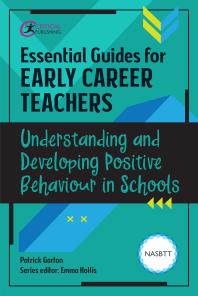
Essential Guides for Early Career Teachers Understanding and Developing Positive Behaviour in Schools 1st Edition by Patrick Garton, Emma Hollis 1040374757 9781040374757
Original price was: $50.00.$25.00Current price is: $25.00.
Essential Guides for Early Career Teachers: Understanding and Developing Positive Behaviour in Schools 1st Edition by Patrick Garton, Emma Hollis – Ebook PDF Instant Download/Delivery: 1040374757, 9781040374757
Full download Essential Guides for Early Career Teachers: Understanding and Developing Positive Behaviour in Schools 1st Edition after payment
Product details:
ISBN 10: 1040374757
ISBN 13: 9781040374757
Author: Patrick Garton, Emma Hollis
Behaviour is the number one concern for most early career teachers so this accessible book provides a range of research informed and road-tested strategies to support the development of positive classroom systems and structures. It offers key psychological insights into the factors that lie behind different behaviours, helping you understand and manage your own behaviours as well as those of the children and young people you teach. Chapters cover understanding individuals, the classroom environment and the wider school context, as well as working with parents and carers. Ultimately the book enables you to successfully work with groups of children and young people so that they can learn effectively and make progress. The Essential Guides for Early Career Teachers series provides accessible, carefully researched, quick reads for early career teachers, covering the key topics you will encounter during your training year and first two years of teaching. They complement and are fully in line with the new Early Career Framework and are intended to assist ongoing professional development by bringing together current information and thinking on each area in one convenient place.
Essential Guides for Early Career Teachers: Understanding and Developing Positive Behaviour in Schools 1st Table of contents:
1. Behaviour matters
What?
Setting the scene
What is behaviour management?
Making sense of the Teachers’ Standards
Examining Teachers’ Standard 7 in more detail
Recent and relevant documents to shape your thinking
Where should you focus your attention?
1 Below the Radar: Low-level Disruption in the Country’s Classrooms
2 What Makes Great Teaching? Review of the Underpinning Research
3 Getting the Simple Things Right: Charlie Taylor’s Behaviour Checklists
4 The Beginning Teacher’s Behaviour Toolkit: A Summary
So what?
Reflective task
Case study 1
Experienced headteacher
Case study 2
Experienced teacher
Case study 3
Early career teacher (in third year of teaching)
Case study 4
Trainee teacher
Now what?
Practical task for tomorrow
Practical task for next week
Practical task for the long term
What next?
Further reading
References
2. Understanding how your behaviours influence the behaviour of others
What? (The big idea)
The only behaviour you can truly control is your own
So what?
What difference can this make?
Use of voice
Use of space
Use of body language and facial expressions
Developing authority as part of your teacher identity
Habitual responses
Reflective task
Reflective task
Case study 1
A recently qualified teacher
Case study 2
An experienced middle leader
Case study 3
An experienced colleague working with early career teachers
Now what?
Practical task for tomorrow
Practical task for next week
Practical task for the long term
What next?
Further reading
3. Whole class systems, structures and routines
What? (The big idea)
The power of consistency
So what?
What difference can this make? The central importance of expectations
Persistent to get there; consistent to keep it there
The ‘implementation dip’
Habits
Planning for positive behaviour
Seating plans
Getting off to a positive start
Planning for silence
Sanctions and rewards
Theories of punishment
Types of sanction
Rewards
The end of the lesson
Reflective task
Case study
A newly qualified teacher
Now what?
Practical task for tomorrow
Practical task for next week
Practical task for the long term
What next?
Further reading
References
4. Behaviour management as part of the classroom environment
What? (The big idea)
Everything is connected
So what? What difference will this make?
Plans versus reality
Planning effective tasks
The words you use
Questioning
1 Choral responses
2 No hands/cold calling
3 Allow thinking and/or writing time before collecting answers
4 Think, pair, share
Other factors to consider with questioning
So what?
Reflective tasks
Case study 1
A teacher with five years’ experience
Case study 2
An early career teacher
Case study 3
Senior leader
Now what?
Practical task for tomorrow
Practical task for next week
Practical task for the longer term
What next?
Further reading
References
5. Understanding individuals
What? The big idea
One class but many individuals
So what?
The Hidden Lives of Learners
Factors that drive and determine human behaviour
Motivation
Individuals with particular challenges
Conversations with individuals
Public conversations
Private conversations
Five common patterns of behaviour and suggested strategies
Pupils with special educational needs and disabilities
The four areas of need
Final top tips for working with individuals
So what?
Reflective tasks
Case study 1
Teacher with five years’ teaching experience
Case study 2
A recently qualified teacher
Case study 3
Special Educational Needs and Disability Co-ordinator
Now what?
Practical task for tomorrow
Practical task for next week
Practical task for the longer term
What next?
Further reading
References
6. Behaviour management in a wider school context
What? The big idea
Successful behaviour management is a team effort
So what?
What difference will it make?
Asking for help from others
Your mentor
Headteachers and senior leaders
Other colleagues with specific knowledge and expertise
Teaching assistants and learning support assistants
Behaviour and relationships outside your classroom
When colleagues and whole school systems can be unhelpful
Negative colleagues
Setting and ability groupings
Reflective tasks
Case study 1
Early career teacher
Case study 2
A newly qualified teacher
Now what?
Practical task for tomorrow
Practical task for next week
Practical task for the long term
What next?
Further reading
References
7. Working with parents and carers to support positive behaviour
What?
So what?
Advice for formal meetings or phone calls with parents
Reflective task
Case study 1
A newly qualified teacher
Case study 2
An experienced pastoral leader
Now what?
Practical task for tomorrow
Practical task for next week
Practical task for the longer term
People also search for Essential Guides for Early Career Teachers 1st:
positive behaviour in schools
classroom management for new teachers
early career teaching strategies
positive learning environments
behaviour management in education
Tags: Essential Guides, Early Career, Understanding, Developing Positive, Patrick Garton, Emma Hollis
You may also like…

Uncategorized
Practical Behaviour Management for Primary School Teachers 1st Edition Tracey Lawrence

Education Studies & Teaching - Teaching & Teacher Training

Uncategorized

Languages - English as a Foreign Language & Reference
Education Studies & Teaching - Special Education

Education Studies & Teaching - Higher & Further Education

Education Studies & Teaching - Educational Theory
Effective Schools in Developing Countries 1st Edition Henry Levin
Uncategorized