
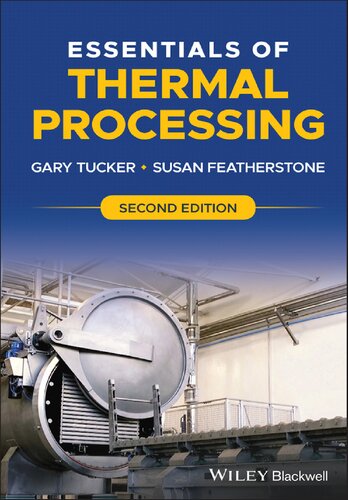
Essentials of thermal processing 2nd Edition by Gary Tucker, Susan Featherstone ISBN 1119470374 978-1119470373


Original price was: $50.00.$25.00Current price is: $25.00.
Essentials of thermal processing 2nd Edition by Gary Tucker, Susan Featherstone – Ebook PDF Instant Download/Delivery: 1119470374 , 978-1119470373
Full download Essentials of thermal processing 2nd edition after payment
Product details:
ISBN 10: 1119470374
ISBN 13: 978-1119470373
Author: Gary Tucker, Susan Featherstone
ESSENTIALS OF THERMAL PROCESSING
Explore this fully updated new edition of a practical reference on food preservation from two leading voices in the industry
Among all food preservation methods in use today, thermal processing remains the single most important technique used in the industry. The newly revised Second Edition of Essentials of Thermal Processing delivers a thorough reference on the science and applications of the thermal processing of a wide variety of food products. The book offers readers essential information on the preservation of food products by heat, including high-acid foods and low-acid sterilized foods requiring a full botulinum cook.
The accomplished authors―noted experts in their field―discuss all relevant manufacturing steps, from raw material microbiology through the various processing regimes, validation methods, packaging, incubation testing, and spoilage incidents.
Essentials of thermal processing 2nd Table of contents:
1 History of Thermal Processing
1.1 A BRIEF HISTORY OF THE SCIENCE AND TECHNOLOGY OF THERMAL PROCESSING
1.2 FOOD MICROBIOLOGY AS A SCIENCE
1.3 PACKAGING FOR HEAT PRESERVED FOODS
1.4 DEVELOPMENTS IN CANNERY EQUIPMENT
1.5 FOOD SAFETY
References
2 Microbiology of Heat Preserved Foods
2.1 FOOD MICROBIOLOGY
2.2 FACTORS THAT AFFECT THE GROWTH OF MICRO‐ORGANISMS
2.3 DESCRIPTION OF SOME MICRO‐ORGANISMS OF IMPORTANCE TO THERMAL PROCESSING
2.4 RISK OF LEAKER SPOILAGE FROM DAMAGED OR COMPROMISED PACKAGING
2.5 A GUIDELINE FOR IDENTIFYING SPOILAGE IN CANNED FOODS
References
3 Hurdles to Microbial Growth
3.1 CONTROL OF THE MICRO‐ORGANISM LOADING
3.2 USE OF RESTRICTIVE pH LEVELS
3.3 ANAEROBIC ENVIRONMENT OR MODIFIED ATMOSPHERE ENVIRONMENT
3.4 LOW TEMPERATURES
3.5 DEHYDRATION OR LOW WATER ACTIVITY
3.6 CHEMICAL PRESERVATION
3.7 IRRADIATION
3.8 COMBINATION TREATMENTS
References
4 Low‐acid Canned Foods
4.1 PRODUCTION OF A THERMALLY PROCESSED FOOD
4.2 F03 STERILISATION PROCESSES
4.3 COMMERCIAL STERILISATION
4.4 MICRO‐ORGANISM DEATH KINETICS
4.5 LOG REDUCTIONS
References
5 Acid Foods and Other Pasteurised Products
5.1 BACKGROUND
5.2 PASTEURISATION
5.3 INHIBITORY FACTORS TO MICRO‐ORGANISM GROWTH
5.4 PASTEURISATION VALUE (P‐VALUE) GUIDELINES
5.5 GUIDELINES AND GENERAL RECOMMENDATIONS
5.6 THERMAL PROCESSING OF FRUIT
5.7 THERMAL PROCESSING OF PRODUCTS WITH LOW WATER ACTIVITY
5.8 THERMAL PROCESSING OF CURED MEATS
References
6 Acidified Foods
6.1 BACKGROUND
6.2 ACIDITY MEASUREMENT USING pH
6.3 ACIDIFICATION OF FOODS
6.4 PROCESSING ACIDIFIED FOODS
6.5 DESIGN OF PASTEURISATION PROCESSES
6.6 HOT FILL AND HOLD PROCESSING
6.7 CRITICAL CONTROL POINTS IN THE PRODUCTION OF ACIDIFIED FOODS
References
7 Heat Preserved Chilled Foods
7.1 UNDERSTANDING MICROORGANISM BEHAVIOUR
7.2 METHODS OF MANUFACTURE
References
8 Processing Systems
8.1 IN‐PACK PROCESSING: RETORT SYSTEMS
8.2 IN‐LINE PROCESSING: HEAT EXCHANGERS
8.3 NEW THERMAL TECHNOLOGIES
References
9 Cook Values and Optimisation of Thermal Processes
9.1 MATHEMATICAL ANALYSIS OF COOKING
9.2 SETTING PROCESS TARGETS
References
10 Process Validation
10.1 TEMPERATURE DISTRIBUTION
10.2 HEAT DISTRIBUTION
10.3 HEAT DISTRIBUTION TESTING
References
11 Process Validation
11.1 SETTING THE TARGET PROCESS VALUE
11.2 SELECTING THE CONDITIONS FOR THE HP STUDY
11.3 LOCATING THE PRODUCT COLD POINT
11.4 PROCESS ESTABLISHMENT METHODS
11.5 PROCESS CALCULATION METHODS
References
12 Cooling Water Treatment
12.1 CHLORINE
12.2 CHLORINE DIOXIDE
12.3 BROMINE
12.4 OZONE
12.5 ULTRAVIOLET LIGHT
12.6 MEMBRANE FILTRATION
References
13 Handling Processing Deviations
13.1 WHAT CONSTITUTES A PROCESS DEVIATION
13.2 WHAT CAN GO WRONG
13.3 ACTIONS REQUIRED
14 Packaging Options for Heat‐Preserved Foods
14.1 METAL CONTAINERS
14.2 CAN CONSTRUCTION AND HANDLING
14.3 GLASS
14.4 PLASTICS, FLEXIBLES, AND LAMINATES
References
15 Incubation Testing
15.1 PURPOSE OF INCUBATION TESTS
15.2 CAUSES OF SPOILAGE
15.3 DESCRIPTIVE TERMS FOR CANNED FOOD SPOILAGE
15.4 METHODS FOR INCUBATION TESTING
15.5 BIOTESTING
References
16 Critical Factors in Thermal Processing
16.1 BACKGROUND
16.2 KEY ASPECTS OF HYGIENE CONTROL SYSTEMS FOR FOOD PROCESSING (FROM CODEX ALIMENTARIUS)
16.3 IDENTIFYING CRITICAL CONTROL POINTS IN THERMAL PROCESSING
References
17 Environmental Aspects of Thermal Processing
17.1 LIFECYCLE ASSESSMENT (LCA)
17.2 GREENHOUSE GAS EMISSIONS
People also search for Essentials of thermal processing 2nd :
what is thermal processing
essentials of thermal processing pdf
Types of thermal processing
what is thermal processing of food
examples of thermal processing
You may also like…

Religion & Spirituality - Bible
Engineering - Energy & Power Resources
Thermal Guidelines for Data Processing Environments 5th Edition by Ashrae 1947192655 9781947192652


Uncategorized

Technique - Food Manufacturing
Food Processing Advances In Non Thermal Technologies Kshirod Kumar Dash

Technique - Food Manufacturing
Food Processing Advances in Thermal Technologies Kshirod Kumar Dash

Biology and other natural sciences Biostatistics

Politics & Philosophy - Social Sciences
A nation of immigrants Second Edition by Susan Martin 9781108902076 1108902073

Uncategorized