
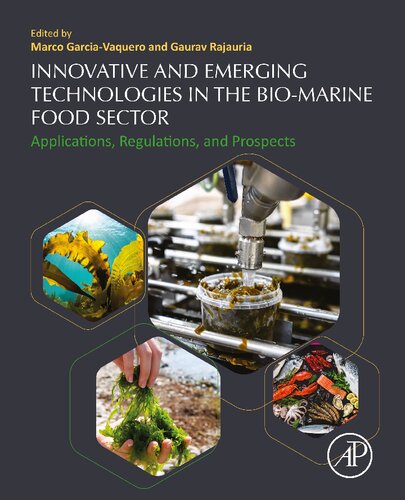
Innovative and Emerging Technologies in the Bio marine Food Sector Applications Regulations and Prospects 1st Edition by Marco Garcia Vaquero, Gaurav Rajauria ISBN 0128200960 978-0128200964


Original price was: $50.00.$25.00Current price is: $25.00.
Innovative and Emerging Technologies in the Bio-marine Food Sector: Applications, Regulations, and Prospects 1st Edition by Marco Garcia Vaquero, Gaurav Rajauria – Ebook PDF Instant Download/Delivery: 0128200960 , 978-0128200964
Full download Innovative and Emerging Technologies in the Bio-marine Food Sector: Applications, Regulations, and Prospects 1st edition after payment
Product details:
ISBN 10: 0128200960
ISBN 13: 978-0128200964
Author: Marco Garcia Vaquero, Gaurav Rajauria
Innovative and Emerging Technologies in the Bio-marine Food Sector: Applications, Regulations, and Prospects presents the use of technologies and recent advances in the emerging marine food industry. Written by renowned scientists in the field, the book focuses primarily on the principles of application and the main technological developments achieved in recent years. It includes technological design, equipment and applications of these technologies in multiple processes. Extraction, preservation, microbiology and processing of food are extensively covered in the wide context of marine food products, including fish, crustaceans, seafood processing waste, seaweed, microalgae and other derived by-products.
This is an interdisciplinary resource that highlights the potential of technology for multiple purposes in the marine food industry as these technological approaches represent a future alternative to develop more efficient industrial processes. Researchers and scientists in the areas of food microbiology, food chemistry, new product development, food processing, food technology, bio-process engineers in marine based industries and scientists in marine related areas will all find this a novel resource.
- Presents novel innovative technologies in the Bio-marine food sector, including principles, equipment, advantages, disadvantages, and future technological prospects
- Explores multi-purpose uses of technologies for extraction, functional food generation, food preservation, food microbiology and food processing
- Provides industrial applications tailored for the marine biological market to foster new innovative applications and regulatory requirements
Innovative and Emerging Technologies in the Bio-marine Food Sector: Applications, Regulations, and Prospects 1st Table of contents:
Chapter 1. Overview of the application of innovative and emerging technologies in the bio-marine food sector
Abstract
1.1 Introduction
1.2 Marine resources
1.3 Emerging technologies
1.4 Book objectives
1.5 Book structure
References
Chapter 2. Regulations on the use of emerging technologies and bio-marine food products
Abstract
2.1 Introduction
2.2 Principles of food regulation
2.3 Food safety systems
References
Chapter 3. Equipment and recent advances in ultrasound technology
Abstract
Acknowledgments
3.1 Introduction
3.2 Ultrasound principles
3.3 Applications of ultrasounds in food processes
3.4 Current advances in ultrasound equipment
3.5 Ultrasound to improve conventional methods in the bio-marine sector
3.6 Use of ultrasound combined with other innovative technologies
3.7 Future trends of sonication and limitations of the technology
References
Chapter 4. Ultrasound-assisted extraction of proteins and carbohydrates
Abstract
4.1 Introduction
4.2 Marine sources of proteins and carbohydrates
4.3 Ultrasound mechanism of action
4.4 Principles of ultrasound-assisted extraction
4.5 Ultrasonic extraction of proteins
4.6 Ultrasound-assisted extraction of carbohydrates
4.7 Applications of protein and carbohydrate compounds
References
Chapter 5. Ultrasound-assisted extraction of lipids, carotenoids, and other compounds from marine resources
Abstract
5.1 Introduction
5.2 Mechanism of ultrasound-assisted extraction
5.3 Parameters affecting ultrasound-assisted extraction
5.4 Marine resources
5.5 Ultrasound-assisted extraction of different bioactive from various marine sources
5.6 Marine-derived compounds and prospects
5.7 Industrial applications of marine origin compounds
5.8 Ultrasonic devices
5.9 Ultrasound-assisted extraction: Industrial prospects
5.10 Summary
References
Chapter 6. Other ultrasound-assisted processes
Abstract
6.1 Introduction
6.2 Ultrasound-assisted decontamination and preservation
6.3 Ultrasound-assisted heat and mass transfer processes
6.4 Other applications
6.5 Conclusions
References
Chapter 7. Equipment and recent advances in pulsed electric fields
Abstract
Acknowledgments
7.1 Introduction
7.2 PEF processing
7.3 Recent advances in the application of PEF in the bio-marine food sector
7.4 Industrial PEF equipment
7.5 Advantages and limitations of PEF
7.6 Future trends
7.7 Summary
References
Chapter 8. Pulsed electric fields for the extraction of proteins and carbohydrates from marine resources
Abstract
8.1 Introduction
8.2 Marine bioresources
8.3 Electric field extraction
8.4 PEF extraction of marine bioresources
8.5 Future prospects and conclusions
References
Chapter 9. Pulsed electric fields for the extraction of lipids, pigments, and polyphenols from cultured microalgae
Abstract
Abbreviations
9.1 Introduction
9.2 Pulsed electric fields for the extraction of lipids
9.3 Pigments: Chlorophylls and carotenoids
9.4 Polyphenols and other valuable compounds
9.5 Towards industrial products derived from marine microorganisms
9.6 Conclusions
References
Chapter 10. Other pulse-assisted processes for the bio-marine food sector
Abstract
10.1 Introduction
10.2 Mechanism of microbial inactivation
10.3 Application of PEF for seafood preservation and improved quality of fish and fish products
10.4 Application of PEF for by-products valorization
10.5 Advantage, disadvantage, and market challenges of PEF
10.6 Conclusions
References
Chapter 11. Equipment and recent advances in supercritical fluids extraction
Abstract
11.1 Introduction
11.2 Supercritical fluid extraction of functional ingredients from marine species
11.3 Conclusions
11.4 Summary points
References
Chapter 12. Extraction of carbohydrates and proteins from algal resources using supercritical and subcritical fluids for high-quality products
Abstract
Acknowledgement
12.1 Introduction
12.2 Extraction of biomolecules through different fluid extraction methods
12.3 Improvement of extraction yield
12.4 Current patents on supercritical/subcritical fluid extraction processes for carbohydrate and protein extraction from microalgae
12.5 Conclusion and future prospect
References
Chapter 13. Supercritical fluid extraction of lipids, carotenoids, and other compounds from marine sources
Abstract
Abbreviations
Acknowledgments
13.1 Introduction
13.2 Supercritical fluid extraction of high-value compounds from marine sources
13.3 Recent applications of SFE for high value compounds from marine resources: Microalgae, macroalgae, fisheries products, and by-products
13.4 Recent advances in gas-expanded liquids processes for marine products
13.5 Green-based biorefinery approaches for obtaining bioactive compounds from marine sources
13.6 Potential applications of the marine bioactive extracts in the food industry
13.7 Conclusions and future trends
References
Chapter 14. Other supercritical fluid processing
Abstract
Abbreviations
Acknowledgments
14.1 Introduction
14.2 Main features and uses of SCCO2
14.3 Mechanism of action of CO2 as antimicrobial
14.4 Applications of supercritical fluids in shellfish and seafood
14.5 Conclusions
References
Chapter 15. Equipment and recent advances in microwave processing
Abstract
15.1 Introduction
15.2 Extraction technologies
15.3 Microwave-assisted extraction (MAE)
15.4 Conclusions and future trends
References
Chapter 16. Microwave-assisted extraction of proteins and carbohydrates from marine resources
Abstract
16.1 Introduction
16.2 Methodology of applying microwave-assisted extraction technique
16.3 Microwave-assisted extraction of proteins and carbohydrates from algae
16.4 Microwave-assisted extraction of fish
16.5 Conclusion
References
Chapter 17. Microwave-assisted extraction of lipids, carotenoids, and other compounds from marine resources
Abstract
Abbreviations
Acknowledgments
17.1 Introduction
17.2 Microwave-assisted extraction
17.3 Microwave-assisted extraction of lipids from marine resources
17.4 Microwave-assisted extraction of carotenoids from marine resources
17.5 Microwave-assisted extraction of other compounds from marine resources
17.6 Summary points
References
Chapter 18. Other microwave-assisted processes: Microwaves as a method ensuring microbiological safety of food
Abstract
18.1 The hazard for consumers related to microbial food contamination—The most important pathogens and food-borne diseases
18.2 Major microorganisms related to marine food: The largest and latest epidemic
18.3 Structure of microorganisms
18.4 Possible lethal damage in the microbial cells
18.5 Microwaves as an alternative disinfection method
18.6 The impact of microwaves on bacterial cells
References
Further reading
Chapter 19. Extraction of high-value compounds from marine biomass via ionic liquid-based techniques
Abstract
19.1 Introduction
19.2 General structure and properties of ILs
19.3 High-value products from marine biomass
19.4 Environmental and economic outlook on the extraction process of ILs
19.5 Conclusions and perspective
References
Chapter 20. Application of pressurized liquids to extract high-value compounds from marine biomass
Abstract
20.1 Introduction
20.2 Principles
20.3 Operation
20.4 Effect of parameters
20.5 Advantages and disadvantages
20.6 Marine biomass
20.7 Pressurized liquid extraction of value-added compounds
20.8 Phycobiliproteins
20.9 Conclusions
References
Chapter 21. Application of plasma technologies for food preservation
Abstract
21.1 Introduction
21.2 Principle of plasma generation
21.3 Plasma chemistry
21.4 Application of cold plasma for marine food products preservation
21.5 Application of cold plasma for marine protein alteration
21.6 Advantages and limitations of cold plasma in food preservation
References
Chapter 22. High-pressure processing for food preservation
Abstract
Acknowledgments
22.1 Introduction
22.2 Mechanism and equipment of HPP
22.3 Working principles of HPP
22.4 Pressure-based processes
22.5 Applications of HPP and HS to marine products
22.6 Potential limitation of HPP pprocessing
References
People also search for Innovative and Emerging Technologies in the Bio-marine Food Sector: Applications, Regulations, and Prospects 1st:
technologies for textile dyeing and finishing
journal of emerging technologies and innovative research
innovative food science and emerging technologies
journal of emerging technologies and innovative research jetir
international journal of emerging technologies and innovative research
Tags: Marco Garcia Vaquero, Gaurav Rajauria, Emerging Technologies, Food Sector
You may also like…

Technique - Food Manufacturing
Enzyme Inactivation in Food Processing: Technologies, Materials, and Applications Megh R. Goyal

Physics - Electricity and Magnetism
Modern Ferrites, Emerging Technologies and Applications, Volume 2 1st Edition Vincent G. Harris
Science (General) - International Conferences and Symposiums

Education Studies & Teaching - Studying & Test Preparation
Technique - Energy: Renewable Energy
Hydrogen and Fuel Cells Emerging Technologies and Applications 3rd Edition Bent Sørensen
Business & Economics - Accounting
Public Sector Reform and Performance Management in Emerging Economies 1st Edition Zahirul Hoque
