
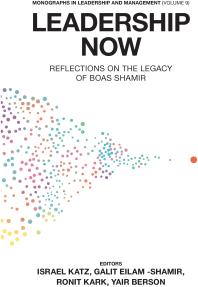
Leadership Now Reflections on the Legacy of Boas Shamir 1st Edition by Israel Katz, Galit Eilam Shamir, Ronit Kark, Yair Berson 1787432580 9781787432581

Original price was: $50.00.$25.00Current price is: $25.00.
Leadership Now: Reflections on the Legacy of Boas Shamir 1st Edition by Israel Katz, Galit Eilam Shamir, Ronit Kark, Yair Berson – Ebook PDF Instant Download/Delivery: 1787432580, 9781787432581
Full download Leadership Now: Reflections on the Legacy of Boas Shamir 1st Edition after payment
Product details:
ISBN 10: 1787432580
ISBN 13: 9781787432581
Author: Israel Katz, Galit Eilam Shamir, Ronit Kark, Yair Berson
The late Boas Shamir made a significant contribution to the development of novel theories and frameworks in the leadership field. He became one of the most influential figures in leadership research, and left behind him an outstanding body of work. Leadership Now: Reflections on the Legacy of Boas Shamir incorporates some of Boas Shamir’s most classic and significant works, and includes contributions from a group that represent the most influential leaders in the field, up and coming scholars, as well as students of Boas Shamir. The first part of the book focuses on Shamir’s most influential work on the motivational effects of charismatic leaders. The second part follows with work on the charismatic relationship; reflecting the shift of Boas Shamir’s work in the later parts of his career from a leader-centric focus to a closer examination of the relational aspects of leadership and the major effects followers have on the leadership process. The third part includes samples of this work on the role of the contextual factors in leadership. This volume aims to preserve Boas Shamir’s legacy and inspire further generations of leadership scholars.
Leadership Now: Reflections on the Legacy of Boas Shamir 1st Table of contents:
Part I: Leader-Centric Approaches
Chapter 1: The Motivational Effects of Charismatic Leadership: A Self-Concept Based Theory1
Introduction
Empirical Evidence
The Problem
Assumptions
The Theory
The Self-Implicating Effects of Charismatic Leadership2
Leader Behavior
Effects on Followers’ Self-Concept
Self-Concept as an Intervening Variable and Further Effects on Followers
Follower Attributes
Follower Values and Identities
Follower Orientations
Organizational Conditions for Charismatic Leadership
Conclusion
References
References Added in Proof
Chapter 2: The Rhetoric of Charismatic Leadership: A Theoretical Extension, a Case Study, and Implic
The Theory
Propositions About Leader–Follower Frame Alignment
Jackson’s Speech to the National Convention of the Democratic Party in July, 1988: Background and
A Content Analysis of the Jackson Speech
References to History and Tradition
Creating, Crystallizing, and Emphasizing a Collective Identity
Reinforcing Collective Efficacy
The Leader’s Identification with the Followers
References to Values and Moral Justifications
References to Hope and Faith
References to Followers’ Self-Efficacy
The Representativeness of the Speech
The Lack of Transactional Elements – A Comparison with Dukakis’S Speech
Conclusion: Toward a Study of Charismatic Rhetoric
References
Chapter 3: “What’s Your Story?” A Life-Stories Approach to Authentic Leadership Development
1. Authentic Leaders and Authentic Leadership – Clarification of Terms
1.1. Authentic Leaders
1.2. Development of Authentic Leaders
1.3. Authentic Leadership
2. The Role of Life-Stories in the Development of Authentic Leaders
2.2. Life-Stories as Self-Justifications
2.3. Leadership Development as a Natural Process
2.4. Leadership Development Out of Struggle
2.5. Leadership Development as Finding a Cause
2.6. Leadership Development as Learning from Experience
2.7. Non-Leaders
2.8. Self-Development as the Development of a Life-Story
2.9. Life-Stories as the Basis of Leader Authentication
3. Practical Implications
4. Research Implications
References
Chapter 4: Keeping the Baby While Refreshing the Bathwater: Revisiting the Role of Singular Leadersh
Shifting Approaches to Leadership Research
Alternative forms of Singular Leadership
Self-Concept as a Foundational Source for Singular Leadership
The Effects of Singular Leadership
Organizational Outcomes
Discussion
Future Theory and Research Implications
Contextual Considerations.
Organizational Culture.
Relationship with Performance.
Connection between Singular and Shared Leadership.
Other Paradoxes.
Managerial Implications
Concluding Thoughts
References
Chapter 5: Charismatic Pygmalion: The Most Effective Leadership Combo
Roots
Charisma’s Origin in Sociology
Convergence of Pygmalion and Charisma
Expectations, Leadership, and Self-Efficacy: Essential Ingredients
The Follower’s Role: Susceptibility and Initiation
Followers’ Influence on Leaders
Methods
Belief in the Means: Means Efficacy
The Dark Side of Leadership and bad Charisma, But not bad Pygmalion
Pygmalion and Charisma: Natural Phenomena that can be Nurtured
Charismatic Pygmalion: The ideal Leader
References
Part II: The Leader-Follower Relationship
Chapter 6: The Charismatic Relationship: Alternative Explanations and Predictions
Introduction
Psychoanalytic Explanations
Freudian Theory – The Leader as the Primal Father
The Narcissistic Explanation – The Leader as an Ideal Object
The Sociological-Symbolic Explanation –Charisma as awe Arousing Centrality
Attribution-Based Explanations
Charisma as Mere Attribution – The Romance of Leadership
Attribution as a Mediating Mechanism Between Leaders’ Behaviors and Effects on Followers
Charisma as the Recruitment Of Followers’ Self-Expressive Motivations – A Self-Concept Based Exp
Comparing the Explanations
The Nature of Psychological Attachment to the Leader
Follower Dependence Versus Autonomy
Uncritical Acceptance and Unquestioning Obedience
Individualistic Versus Collectivistic Orientation
Mediating Processes
Self-Perceptions
Leader Behaviors
The Leader’s Vision
Empowering Behaviors
Leader Superiority Versus Similarity
Formation and Affirmation of Identities
Conclusion
References
Chapter 7: The Role of Followers in the Charismatic Leadership Process: Relationships and Their Cons
The Role of Followers in Noncharismatic Leadership Theories
The Charismatic Leader-Follower Relationship
Two Types of Charismatic Relationships
Followers’ Self-Concepts and the Formation of Charismatic Relationships
Followers’ Susceptibility to Charismatic Influence
Follower Responses to Charismatic Leadership
Followers’ Empowerment of the Charismatic Leader
Consequences of Charismatic Relationships
Implications and Opportunities for Theoretical Extension
References
Chapter 8: Great Minds Think Alike? Congruence in Leader and Follower Organizational Identification
Introduction
Charismatic Leadership
Organizational Identification
Congruence and Charisma
Charisma and Citizenship
Method
Measures
Analysis Strategy
Results
Discussion
References
Chapter 9: Reversing the Lens in Leadership: Positioning Followership in the Leadership Construct
Introduction
Challenges Presented by “Reversing the Lens”
Positioning Followership in the Leadership Construct
Extending the Balanced View
Position-based Perspectives
Leader-centric
Reversing the Lens
Role-based (Formal)
Role-based (Informal)
Process Perspectives
Meaning-making (Co-construction) Process
Identity Construction Process
Co-creation (Behavioral) Process
Combining the Views
Conclusion: Reflecting on Shamir’s Legacy
References
Part III: The Context of Leadership
Chapter 10: Social Distance and Charisma: Theoretical Notes and an Exploratory Study
Introduction
Distance, Familiarity and Leader Idealization
Distance, Ambiguity, and the Romance of Leadership
Distance and Leader Categorization
Distance, Transactional Behaviors, and Trust in the Leader
Distance, Consideration, and Support
Distance, Vision, Rhetorical Skills, and Personal Example
The Study
Content Analysis
Results
Leader Effects
Discriminant Analyses
Discussion
Summary and Interpretation of the Findings
Meindl’s Criticism
Suggestions for Further Research
References
Effects Attributed to the Leader
Chapter 11: Organizational and Contextual Influences on the Emergence and Effectiveness of Charismat
Crisis and Charismatic Leadership
Situational Strength
Organizational Environment
Organizational Life-cycle Stage
Organizational Technology and Tasks
Organizational Structure
Organizational Culture and Mode of Governance
Leader Succession
Leader Organizational Level and Distance from Followers
The Values Represented by Organizational Goals and Tasks
Conclusion
References
Chapter 12: The Implications of Emotional Distance on Construal Level of Leadership
Introduction
Leadership and Distance
Psychological Distance
Emotions, Psychological Distance, and Perceptions of Leaders
Pilot Tests
Reasons for a Sense of Distance and Closeness to Leaders
Discussion
References
Chapter 13: Leadership in transformation: From Maestro to a Jazz Orchestra
Introduction
Emergent Leadership
The Structural Approach in Leadership Research and the Connection to Functionality in Organizations
SNA in the Service of Leadership Research
Advice Networks as Influence Networks in Organizations
References
Chapter 14: Leadership Now: Reflecting on the Legacy of Boas Shamir
Leadership now and in the Future: A Message from Boas Shamir
References
People also search for Leadership Now: Reflections on the Legacy of Boas Shamir 1st:
leadership theory books
charismatic leadership research
followership studies
organizational leadership texts
leadership psychology
Tags: Leadership, Now Reflections, the Legacy, Boas Shamir, Israel Katz, Galit Eilam Shamir, Ronit Kark, Yair Berson
You may also like…

Uncategorized
The Grain of the Clay Reflections on Ceramics and the Art of Collecting 1st Edition Allen S. Weiss

Biography & Autobiography - Historical
Spinoza, Life and Legacy. 1st Edition Prof by Jonathan I. Israel. 9780192599438 0192599437

Uncategorized
Struggle and Hope Reflections on the Recent History of the Transkeian People 1st Edition Mda Mda

Science Fiction - Fantasy Fiction

Psychology - Clinical Psychology
Uncategorized

Uncategorized
On Our Way Home from the Revolution Reflections on Ukraine 1st Edition Bilocerkowycz Sonya

Uncategorized

Business & Economics - Management & Leadership